The Difference Between Cross Stitch, Embroidery, & Needlepoint
Welcome to the Wonderful World of Needlepoint!
If you are curious about needlepoint and want to know more about it before you start, you are in the right place. As you start to explore, your first question might be,’ What is the difference between cross stitch, embroidery, and needlepoint?’
Embroidery
Needlepoint and cross stitch are both different forms of embroidery. I started on my needlework journey doing traditional hand embroidery which typically uses embroidery floss like the DMC thread you see in craft stores. With embroidery, you can stitch on any fabric you choose. Craft stores sell cotton fabric in bundles, which is what I always used.
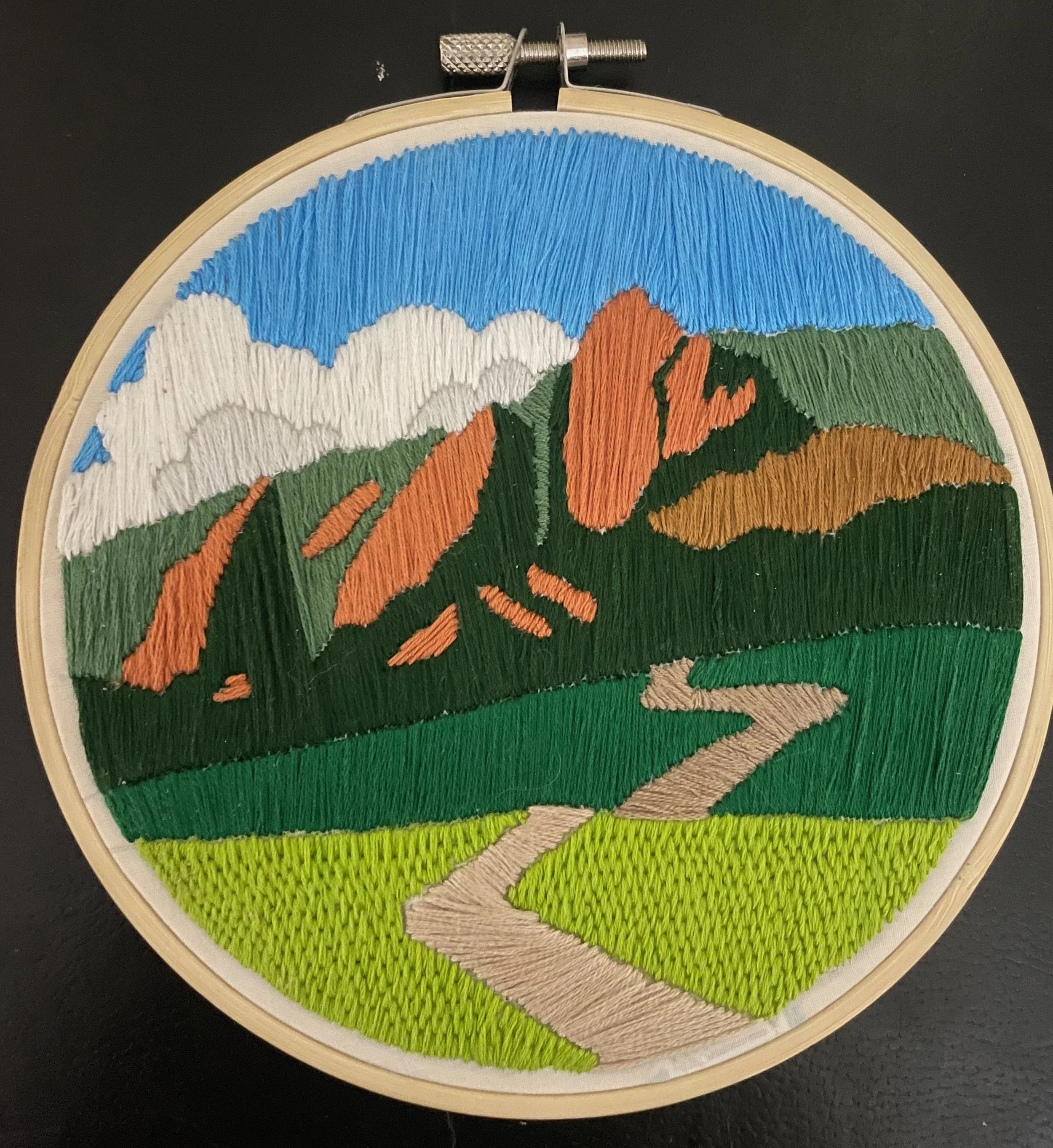
Traditional hand embroidery is done using an embroidery hoop to maintain the tension on your fabric. One benefit of embroidery is that it is fairly inexpensive. Embroidery floss is typically around $1 a skein (the bundle the thread comes in), an 18 X 21 inch, a solid white piece of cotton fabric is about $2, and a basic embroidery hoop pack of three different sizes is about $7. So for a total of around $10, you have everthing you need for your project.
What I liked about traditional hand embroidery is that it allowed me to shut off my brain, and it was a cheap way for me to express myself creatively, especially while I was in college. I also liked that it was easy to travel with. When I would go back and forth from home and school I could just pack my project and go. The one drawback I found to this form of embroidery was that I felt limited with what i could do with my projects when I was done. Typically, my projects would just remain in the hoops and I would hang them on the wall or give them as gifts.
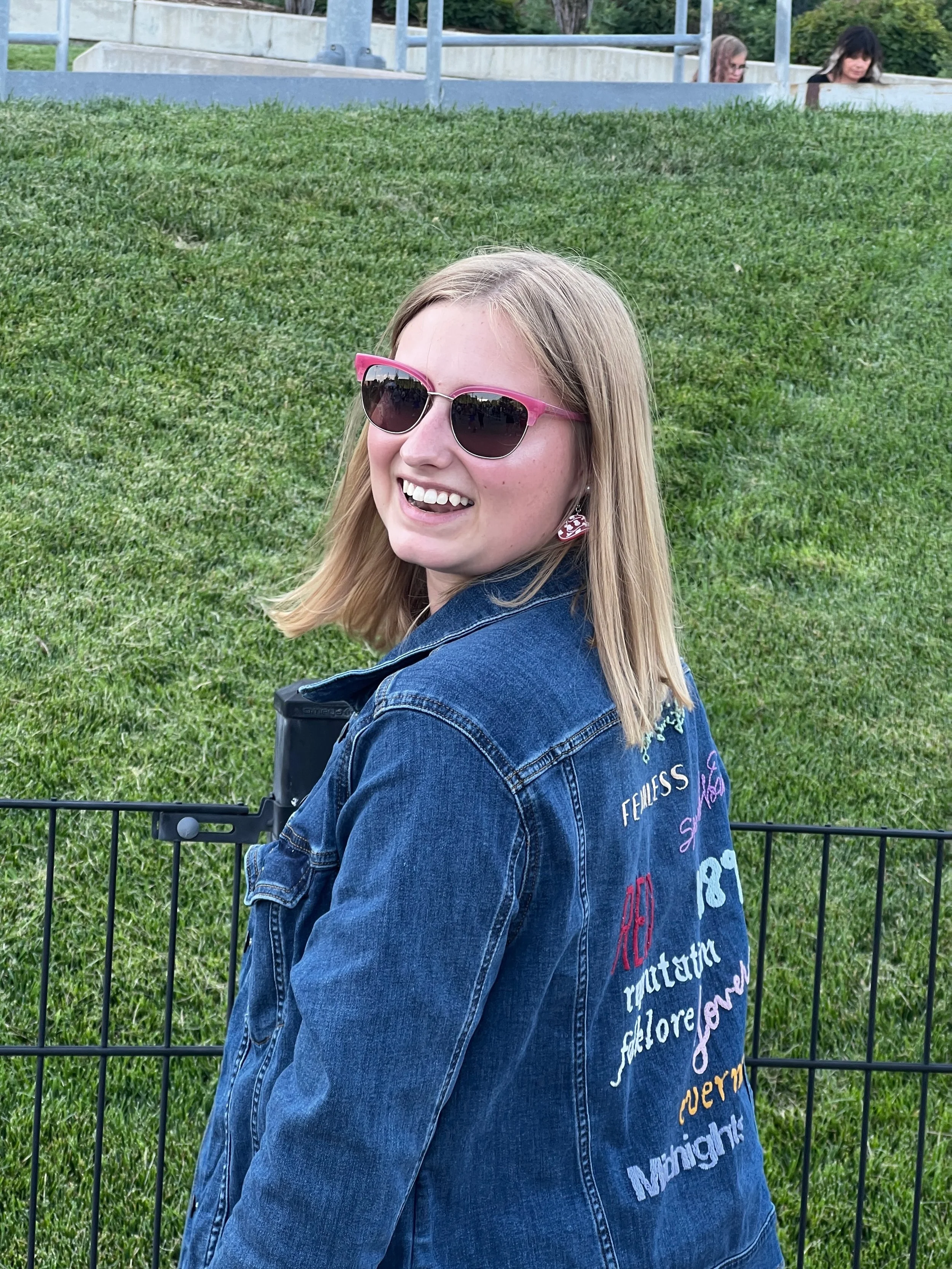
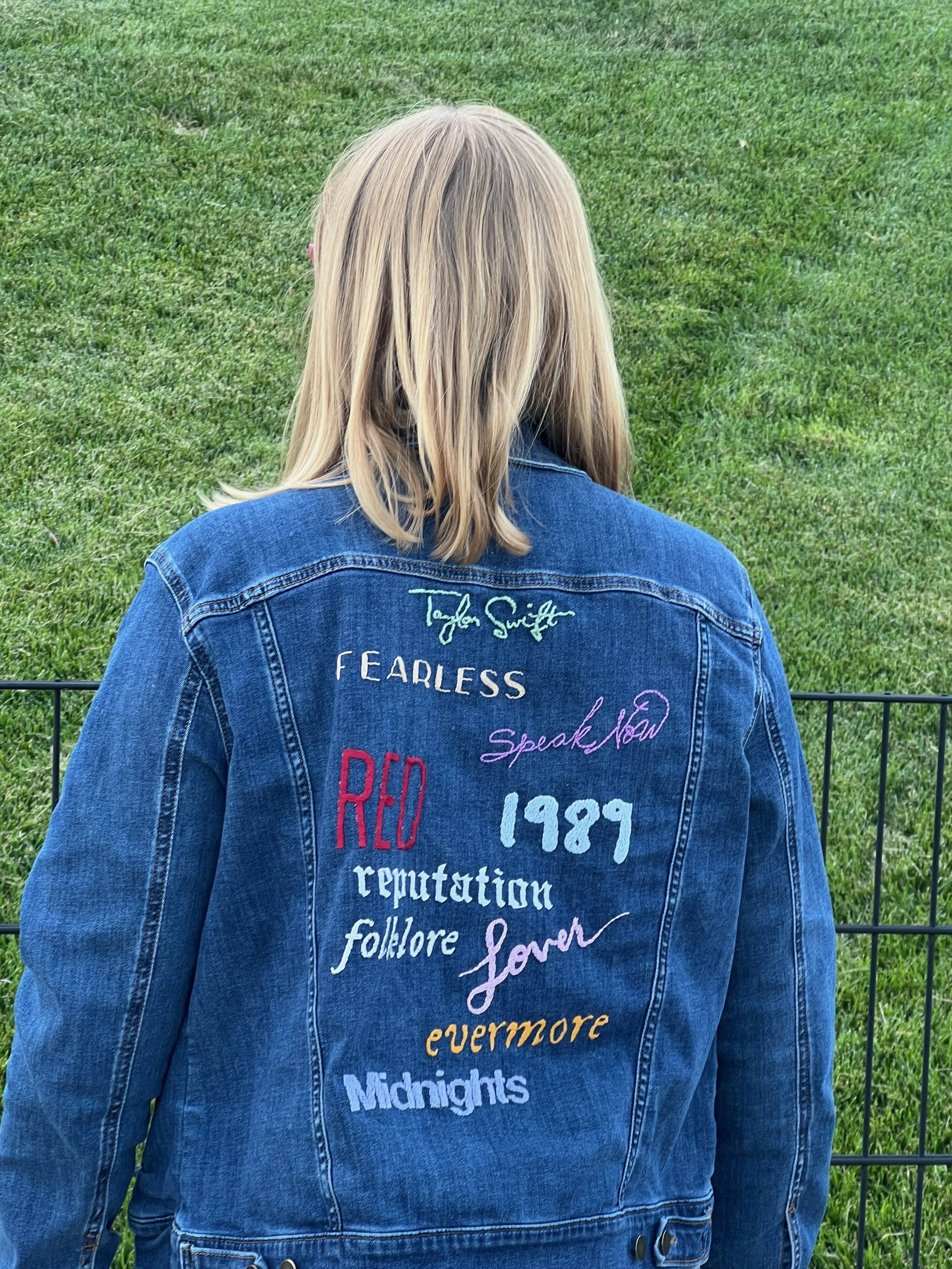
Of course, you can do more with your embroidery. One of my most ambitious projects was a jean jacket I embroidered with all of Taylor Swift's album names on the back to wear to the Eras Tour. Many people embroider on napkins, shirts, bags, and pillow cases. The problem I found with hand embroidery is that the stitching was delicate, and when washed, the knots I made could come undone and the piece could fall apart.
If you are looking to get into needlework without the large financial commitment, I would say traditional hand embroidery is the way to go, however if you are like me, and you want to turn your art work into things like pillows and ornaments or even a purse or belt, needlepoint may be the way to go.
Cross stitch
This is the form of needlework I probably know the least about, because I have personally never done it. Cross stitch is typically done on a specific fabric called ‘aida cloth.’ People also tend to use embroidery floss for this as well. With cross-stitch, there is only one stitch where you make an X with the thread. Cross stitch is also usually counted, which means that unlike needlepoint or hand embroidery where there is a pattern to follow on the fabric or the canvas, you either design or buy a pattern and you count the pattern to see where your stitches should go on your aida cloth. This is why it is often referred to as ‘counted cross stitch.’
There are cross stitch options that are printed on the aida cloth, but the design options are more limited. I have seen finished cross stitch that has been turned into ornaments, hung on the wall in the embroidery hoop, and even finished as a stocking. The primary thing that defines cross stitch is the aida cloth.
Needlepoint
Now for the reason why you are probably here. What is needlepoint?
Needlepoint is a form of embroidery typically done on what is called mono canvas (all about canvas here) which is typically sold in 18 count mesh (18 holes per inch) or 13 count mesh (13 holes per inch). In needlepoint, there are many different stitches you can do. There are many decorative stitches, but there are also basic tent stitches that beginners typically start out with, including continental, half cross, and basketweave.
Unlike traditional embroidery and cross stitch, there are special threads for needlepoint. You can still use floss for needlepoint, but many people prefer to use the threads that are used specifically for needlepoint. There are sparkly threads, ribbons, beads, silk threads, wool threads, and so much more You can read more about needlepoint threads here.
Needlepoint canvases have a design that has been either hand-painted, or printed onto the canvas (more on needlepoint canvas here). Canvases are painted so that each intersection shows a specific color of the design so you know which color of thread goes where. It is almost like paint-by-numbers. If you want to get creative, you can always ‘color swap’ or use a different color of thread on the design than what is painted on the canvas.
There are many fantastic needlepoint designers out there, and thousands of different designs for you to choose from. The main thing that keeps crafters away from needlepoint is the price, but keep in mind that many canvases are hand-painted and needlepoint stores are typically small, local businesses (many of them run by women). There are also ways to keep needlepoint affordable, like painting your own design onto your canvas (make sure you don’t steal someone else's art), using floss instead of a specialty thread, and finishing your project yourself instead of paying a finisher (more on finishing here).
Speaking of finishing, there are plenty of things you can create with your needlepoint, like stockings, ornaments, stand-ups, purses, belts, or framed pieces. If you have read this and still think you want to embark on your needlepoint journey, here is another article that introduces you to the world of needlepoint.