Learn Basketweave
Beginning Your New Thread
The waste knot is the best way to start and anchor your new thread. Start by creating a knot at one end of your thread. You will then stick your needle in the front of the canvas about half an inch from where you are going to start stitching. Start stitching going towards your waste knot. As you go along, your stitches will bury the thread. When you get close to the knot with your stitches, just simply cut off the knot and your thread is secured.
Basketweave
The basketweave stitch is the go-to basic stitch for many stitchers. While it looks the same as continental on the front of the canvas, the way it is done, and how it looks on the back is different. For basketweave you will be stitching on the diagonal instead of up-and-down or side-to-side. The reason it is called basketweave is because once you are done, the back of your canvas will look like a woven basket.
To do this stitch, you must first understand the makeup of needlepoint canvas. It is woven and creates what stitchers call “steps” and “poles”. Steps are where the horizontal line of canvas is in front of the vertical line. Poles are where the vertical line of the canvas is in front of the horizontal line.
Start in the upper left corner of the canvas and work on the diagonal. Going up the “steps” and down the “poles.” It can be a little confusing at first, but once you get the hang of basketweave, it becomes second nature. I love to do this stitch at stitch meet-ups or while watching TV, because I don’t have to pay much attention to what I am doing.
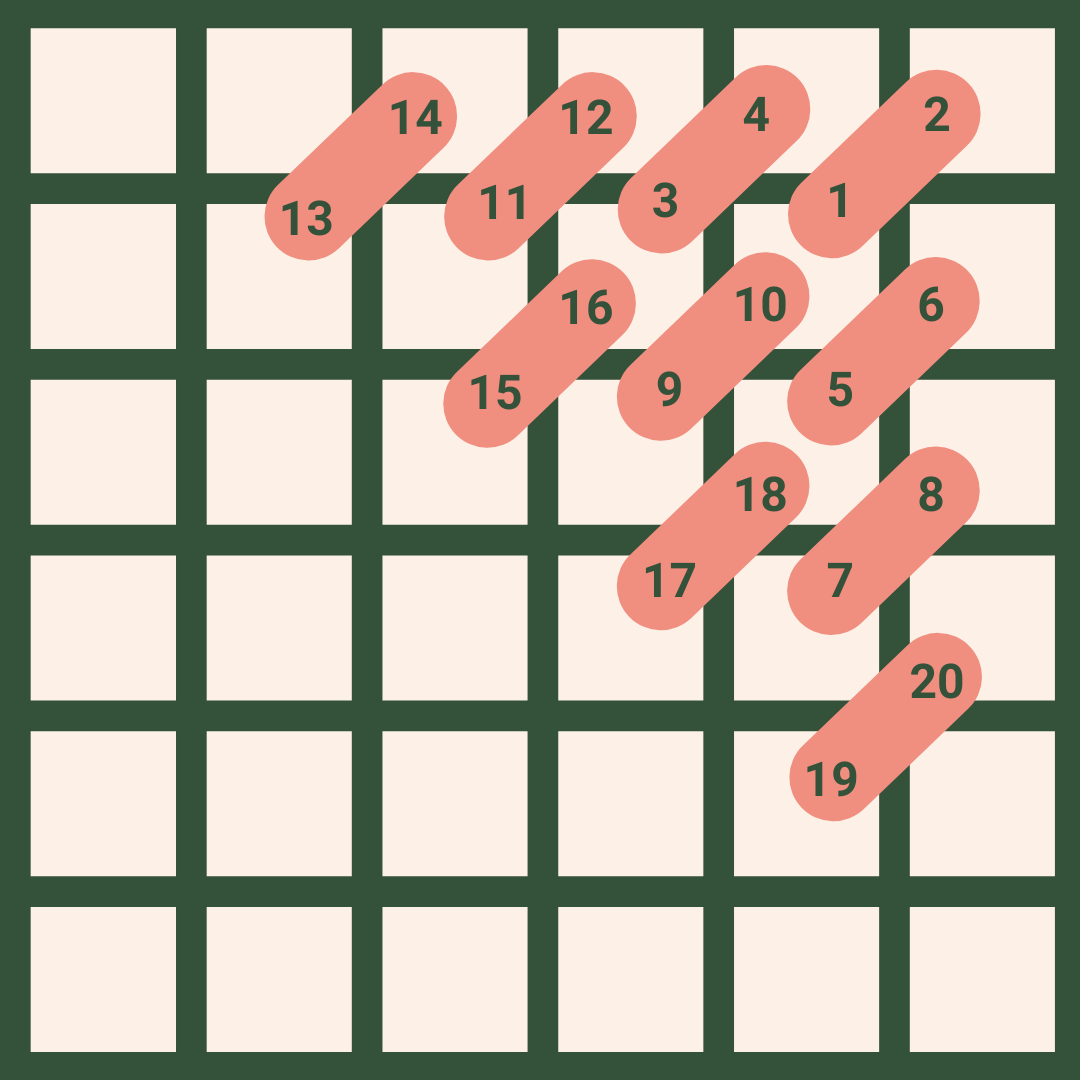
Basketweave Stitch
Ending Your Thread
When you get close to the end of your thread, simply go to the back of your canvas and thread your needle under previously stitched threads that are nearby to secure it. Make sure you only tuck in on the horizontal or vertical not the diagonal because it will show a line on the front of your canvas.